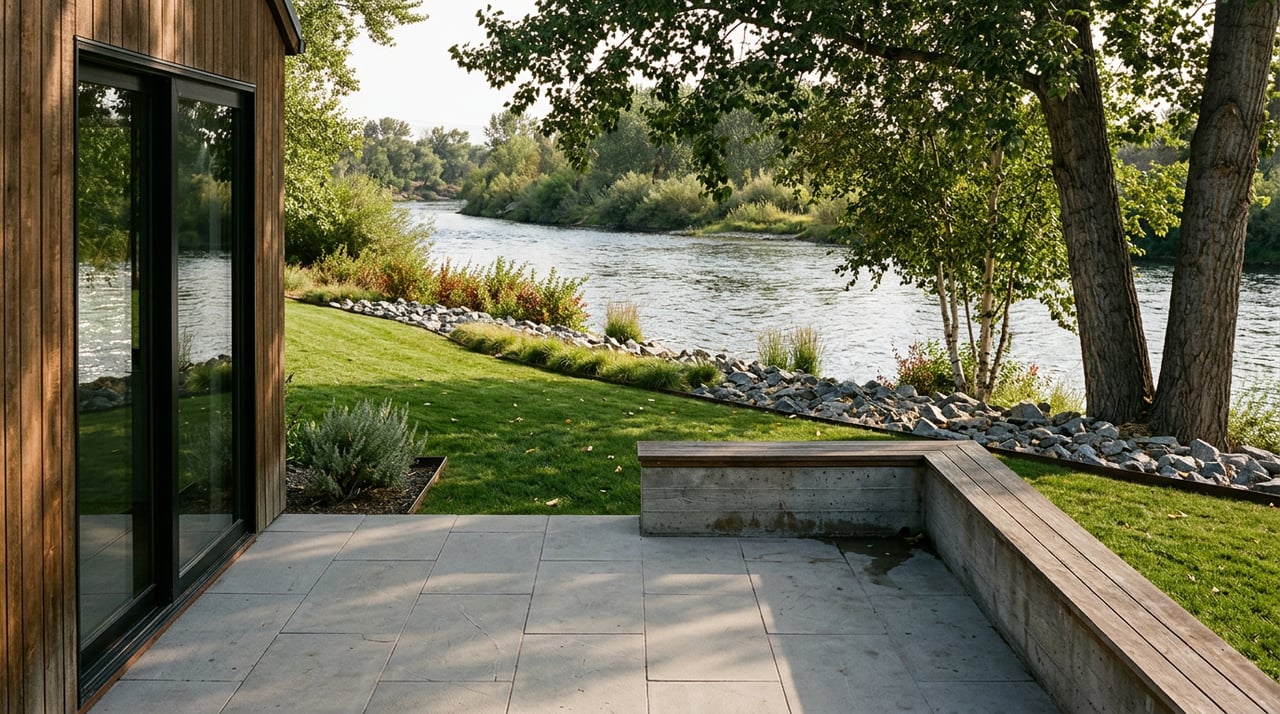
Waking up to flowing water outside your window is a powerful draw in Reno. Maybe you picture morning walks along the Truckee River or sunset views over a peaceful pond. If you are exploring riverfront or waterfront homes, you want the perks without surprises. In this guide, you will learn what “waterfront” really means in Reno, how it affects value and privacy, the flood and insurance facts that matter, and a practical checklist to use on every tour. Let’s dive in.
What counts as waterfront in Reno
Truckee River frontage
True riverfront means the property touches the riverbank. These homes offer the strongest recreation appeal and access to the city’s river corridor, with nearby fishing, paddling, and trails. Be mindful that portions of the corridor include public paths and gathering spaces, which shape privacy and activity levels.
River-view and river-adjacent
Some homes back to the river with a public greenway or roadway between the house and water. You get views and a river setting, but not exclusive access. City policies encourage public esplanades and access along the Truckee, which can increase walkability and visitors near certain parcels. You can see this priority in the City of Reno’s master plan that supports Riverwalk improvements and public access along the corridor. Review the city’s river access approach in the ReImagine Reno plan to understand how public space may intersect with private lots. City policies encourage public access along the Truckee River.
Ponds, detention basins, and ornamental water
Many “waterfront” listings sit on manmade features like HOA ponds or stormwater detention basins. These are typically privately owned infrastructure, not natural lakes. Enjoyment can be high when ponds are well managed, but maintenance, bank stability, algae control, and dredging schedules matter. Ask for HOA records so you understand long-term costs and responsibilities.
Small creeks, ditches, and drains
Features like Steamboat Creek tributaries, the North Truckee drain, and smaller channels add scenic value in places. They can also carry localized flood or erosion risk, which varies by site. Your due diligence should include mapping, elevation data, and any history of drainage improvements.
Golf-course water features
Water hazards and manmade lakes on golf courses offer views and a calm setting. They are privately maintained under club or HOA rules and usually do not provide public water access. Maintenance quality and rules of use vary, so request documents before you buy.
Water rights vs. being on the water
In Nevada, owning land next to water does not mean you own the water or have a right to divert it. Water rights are separate, governed by prior appropriation, and must be verified. If rights matter to you, consult Truckee Meadows Water Authority’s primer and confirm any rights or municipal service before you rely on assumptions. Learn more in the Truckee Meadows Water Authority water rights overview.
Value, privacy, and resale trade-offs
What drives premiums
Water can lift value, but the size and type of water body, view quality, and access all matter. Lakes and large water bodies tend to command the highest premiums, while river and stream proximity shows a smaller, but still measurable, uplift. Vegetation quality and bank condition also influence buyer appeal. There is no single “Reno number,” and flood risk, insurance costs, and public activity can offset premiums.
Reno-specific considerations
In Reno, direct Truckee frontage often prices above HOA pond settings, but each site is unique. Buyers weigh views, access, privacy, and ongoing costs like insurance or HOA pond care. The market also considers planned flood projects and how they may change risk or neighborhood character over time.
Trails, events, and walkability
River-adjacent homes near the Riverwalk may see more foot traffic, festivals, and neighborhood activity. Many buyers love the walkability and dining access, while others prefer more separation. Visit at different times of day to gauge your comfort with nearby public use. City policies encouraging public access are described in the ReImagine Reno master plan.
HOA ponds and maintenance quality
Ponds are only as enjoyable as their maintenance. Well-managed water features support property values, while neglected ponds can become nuisances. Review HOA minutes, reserves, and maintenance schedules, especially for dredging and bank work, before you finalize your offer.
Shoreline protection and permits
Bank stabilization, riprap, or retaining structures can help manage erosion and risk. They also come with permitting requirements and long-term responsibilities. Treat any permanent bank work as a material disclosure item and confirm that permits and inspections are in order.
Flood risk and insurance essentials
Start with the FEMA map
Your first step is to check whether a property sits in a Special Flood Hazard Area on FEMA’s Flood Insurance Rate Maps. Use the FEMA Flood Map Service Center to view the current map for the parcel. Then follow up with local floodplain staff for site-specific interpretations.
Risk Rating 2.0 changes how premiums are set
FEMA’s Risk Rating 2.0 now prices National Flood Insurance Program policies using property-specific variables like distance to water, elevation, foundation, and replacement cost. The mortgage requirement to carry flood insurance still hinges on the flood zone designation, but your premium is calculated more individually. You can read FEMA’s summary of the new approach in the Risk Rating 2.0 overview.
Elevation Certificates and map changes
An Elevation Certificate can still help you secure a more accurate quote and may reduce a premium. Ask if one exists for the property or budget to order one if needed. Learn the basics in the Elevation Certificate resource. In some cases, owners pursue a FEMA Letter of Map Amendment or Revision to reflect survey data or physical changes. A successful LOMA can remove the federal purchase requirement, though lenders may still require coverage. See FEMA’s process for LOMA and LOMR requests.
Community Rating System savings
Washoe County participates in FEMA’s Community Rating System. The county cites a class that has produced a roughly 15 percent discount on some NFIP premiums in past years. CRS classes can change, so verify the current benefit with your insurer and the county. Read about the program on Washoe County’s CRS page.
Coverage limits and exclusions
Standard NFIP policies have important limits. Landscaping, many docks and bulkheads, and some outside structures are often excluded or capped. Basements and utilities have specific rules. Mitigation steps like elevating equipment or the structure can reduce both risk and premiums. Ask for a sample policy and review coverage with your insurer.
Public access, projects, and river data
Riverwalk access and privacy
Public access has been a planning priority along the Truckee River in central corridors. That increases daily life, tourism, and event energy near some riverfront homes. If maximum privacy is a top priority, compare different reaches of the river, tour during peak times, and confirm exactly where public easements are located relative to the lot.
Flood project work to watch
The Truckee River Flood Management Authority leads a multi-reach program of levees, terraces, and restoration to reduce future flood risk. One example is the Vista Narrows Flood Mitigation Project, which has moved into final design. Large projects can change flows, construction timing, and future access in nearby neighborhoods. Stay current on milestones in the Vista Narrows project update.
Where to check river flows
If you like data, bookmark the USGS streamgage for the Truckee River at Reno. It shows current flow, flood stage, and historical peaks, including the January 1997 New Year’s flood that shaped local planning. See live and historical readings at the USGS Truckee River at Reno page.
Buyer checklist for any Reno waterfront home
Use this quick list to frame your due diligence.
- Official mapping and legal status
- Is the property inside a FEMA Special Flood Hazard Area? Pull a parcel-specific view on the FEMA Flood Map Service Center.
- Has FEMA issued a Letter of Map Amendment or Revision for this parcel? Confirm using the LOMA/LOMR process reference.
- Elevation and insurance
- Is there a current Elevation Certificate? If not, ask about timing and cost. Review the Elevation Certificate basics.
- What is the expected NFIP or private flood premium under Risk Rating 2.0? Request multiple quotes.
- Seller disclosures and inspections
- Ask for the completed Nevada Seller’s Real Property Disclosure and any records of flooding, drainage, or water intrusion.
- Request permits and inspection records for any bank stabilization or shoreline work.
- HOA, pond, and drainage
- Who maintains any pond or detention basin? Request the HOA’s maintenance plans, reserve funding, and dredging history.
- Water rights and usage
- Do any water rights transfer with the property, or is the home served by municipal water? Review the TMWA water-rights overview.
- Planned public works and flood projects
- Are there nearby TRFMA projects that could change flows, access, or construction timing? Track updates like Vista Narrows.
- Resale and marketability
- How long do comparable waterfront listings in this neighborhood take to sell? Ask about lender insurance requirements buyers faced on recent comps.
Making the move with confidence
Waterfront in Reno can be extraordinary. You get a daily connection to the Truckee’s rhythm, trail access, and a setting that feels both urban and outdoors. The best outcomes come from pairing that lifestyle vision with clear-eyed due diligence on access, maintenance, flood mapping, and insurance.
If you want a private, data-informed plan for a riverfront or pond-front purchase, reach out to Kristin Zuckerman. You will get concierge-level guidance, financial insight, and a focused strategy to secure the right property with confidence.
FAQs
What does “waterfront” usually mean in Reno real estate?
- In Reno, waterfront can mean direct Truckee River frontage, a river-view lot with a public greenway between you and the water, or adjacency to HOA ponds, drainage channels, small creeks, or golf-course water features. Each type carries different access rights, maintenance duties, and risk profiles.
Do riverfront homes in Reno come with water rights?
- Not automatically. Nevada follows prior appropriation, so land next to water does not guarantee diversion or ownership rights. Verify any transferable rights with local records and review the Truckee Meadows Water Authority water-rights primer before you assume anything.
How do I know if flood insurance will be required for a Reno waterfront home?
- Check FEMA’s map for the parcel. If a structure is in a Special Flood Hazard Area, a federally backed mortgage usually triggers a mandatory purchase requirement. Premiums are then priced individually under Risk Rating 2.0 based on site-specific variables.
Can an Elevation Certificate lower my NFIP premium?
- It can. While quotes may be generated without one, an Elevation Certificate often provides rating details that can reduce premiums and is still used for some map-change requests.
How does public Riverwalk access affect privacy and value?
- Public access can add daily activity, events, and tourism energy near some homes, especially downtown and central reaches. Many buyers value the lifestyle and walkability, while others prefer quieter stretches. Visit at peak times to judge the fit.
Who maintains HOA ponds and what should I ask for?
- Ponds and detention basins are typically maintained by an HOA or a named private owner under development approvals. Ask for maintenance agreements, reserve studies, inspection logs, and dredging or algae-control plans before you write an offer.
Are there flood projects planned that could change conditions along the Truckee?
- Yes. The Truckee River Flood Management Authority advances multi-reach projects to reduce risk. For example, the Vista Narrows project is in final design. Confirm timelines and potential neighborhood impacts when you evaluate a property.