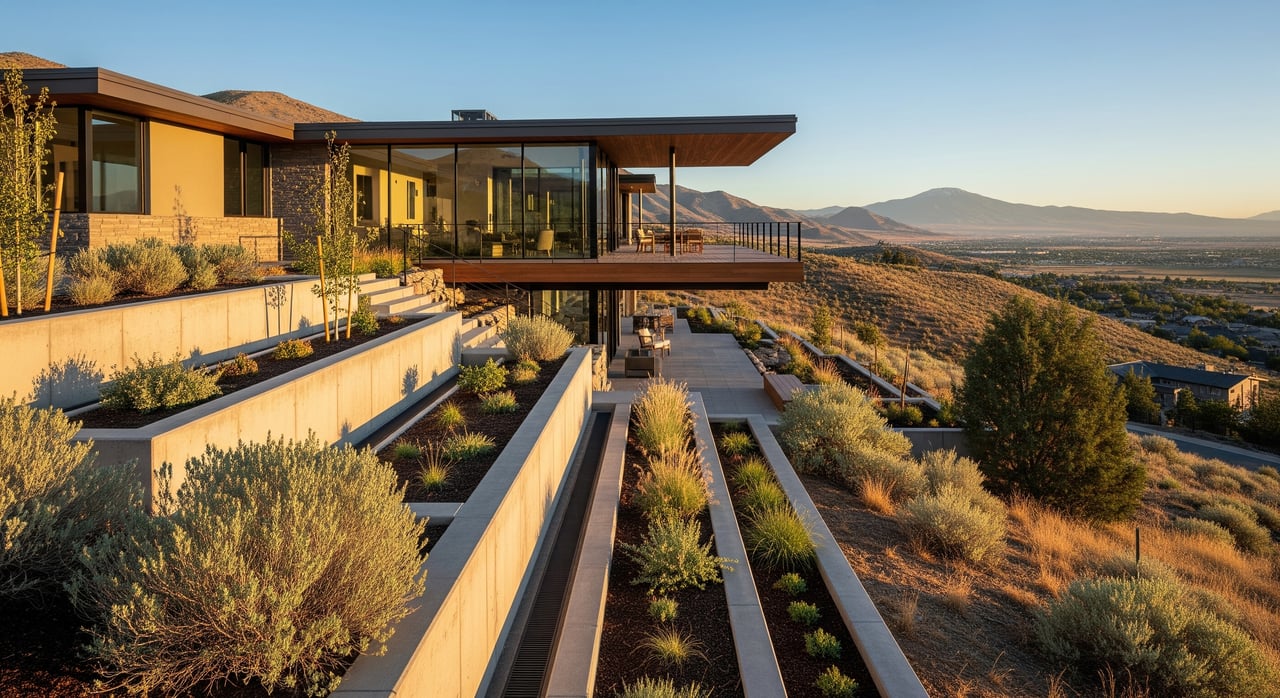
Dreaming of a South Reno home that soaks up mountain light and valley views? Hillside lots offer privacy and drama, but they also come with unique rules, engineering, and drainage needs. With the right plan, you can protect your investment and enjoy the view with fewer surprises. In this guide, you will learn how slope, drainage, permits, hazards, and view rights work in Reno and Washoe County so you can move forward with confidence. Let’s dive in.
How hillside rules shape your project
City or County sets your path
If your lot is inside Reno city limits, you will follow the City of Reno’s permit process and timelines. You can confirm permit types and submittal requirements through the city’s Development Services pages at the City of Reno Building Permits. If your lot is in unincorporated South Reno, Washoe County rules apply, including hillside and grading standards summarized in the county development code.
Grading permits and common triggers
Expect a grading permit if you move more than 50 cubic yards of soil or disturb more than 10,000 square feet. Larger cuts or fills can trigger “major grading,” which usually includes extra review. You can see thresholds and process details on the Washoe County Grading Permits page. Always confirm current limits for your specific parcel.
Hillside approvals and slope limits
Washoe County treats slopes steeper than about 30 percent as less suitable for building and often requires extra analysis and mitigation. Typical submittals include a developable-area analysis, a geotechnical report, drainage and slope stability plans, and a grading and revegetation plan. The county’s hillside standards also regulate retaining walls and manufactured slopes to reduce risk and visual impacts, as outlined in the Washoe County Development Code summary.
Building codes you must follow
Local agencies adopt International Codes with regional amendments. Design professionals must use the editions adopted at the time of permit. You can verify current adoptions and amendments on the Washoe County Building Codes page or by contacting the City of Reno if your lot is within city limits.
Slope, soils and smart foundation design
When you need a geotechnical report
Most hillside projects require a site-specific geotechnical investigation. The report checks for past failures, soil and rock conditions, groundwater, and seismic forces, then recommends footing types, benching details, and drainage controls. Washoe County’s hillside rules call for this analysis on steep sites and when significant grading or fills are proposed, as noted in the county code summary.
Foundation and retaining wall strategies
Engineers often recommend stepped or split foundations that follow the natural slope instead of a single large pad. Where needed, deeper foundations like drilled piers can transfer loads to competent strata. Retaining walls must be engineered with proper drainage and reinforcement, and interceptor and toe drains help keep water out of slopes. Benching and compacting any fill into competent material is critical for stability, per the county standards.
Drainage, erosion and stormwater
During construction: SWPPP and BMPs
Hillside sites must control sediment and runoff during construction. The Truckee Meadows Construction Site BMP Handbook explains required erosion controls like silt fences, sediment traps, stabilized entrances, slope protection, and revegetation. If you disturb 1 acre or more, state stormwater permit rules apply. Review the regional guidance in the Truckee Meadows BMP Handbook.
After construction: manage water for the long term
Your site design should direct water away from structures, typically with at least a slight slope away from the building pad. Preserve native vegetation where you can, hydroseed disturbed areas, and add energy dissipators where concentrated flows hit natural ground. Washoe County expects permanent drainage solutions that control erosion and protect neighboring properties, consistent with the hillside and grading standards.
Hazards, wildfire and insurance
What drives slope failures
Rain, snowmelt, rising groundwater, earthquakes, wildfire, and human changes to slopes can all trigger instability. These factors are relevant in Washoe County’s climate and terrain. The USGS landslide hazards overview explains common causes and warning signs.
Flood maps can change
Even hillside parcels can be affected by mapped floodplains along nearby drainages or culverts. FEMA maps in Washoe County are updated from time to time, which can alter a lot’s status. Check with county engineering or review the county’s FEMA program contacts and updates before you rely on old maps.
Insurance gaps to discuss
Standard homeowner policies often exclude earth movement, including landslides and quake-related movement. Flood insurance is separate if your lot is in a mapped Special Flood Hazard Area. The USGS guidance notes these exclusions, so get quotes early and ask specific questions about landslide and flood coverage.
Views: what you can and cannot protect
Private views are not automatically protected
In Nevada, your private view is not guaranteed unless you have a recorded view easement, conservation easement, or a similar restriction. Without that, a neighbor’s future project could lawfully affect your view if it meets local zoning and setbacks. Nevada’s easement rules are described in NRS Chapter 111.
How to check and plan for views
- Review your title report and CC&Rs for recorded view or conservation easements.
- Ask whether the uphill parcel has any recorded restrictions that benefit your lot.
- Verify zoning to see what could be built nearby and how tall.
- On some hillside projects, the county may require a viewshed analysis to address public view impacts, as noted in the county hillside standards.
Buyer and builder checklist for South Reno hillsides
- Confirm jurisdiction. Determine whether your lot is in the City of Reno or unincorporated Washoe County, then review the City of Reno Building Permits or Washoe County Building Codes.
- Check grading triggers. If you plan to move more than 50 cubic yards or disturb over 10,000 square feet, budget time for a grading permit. Start with the Washoe County Grading Permits page.
- Order a geotechnical report. Hire your geotech early and design foundations and walls per their recommendations, consistent with the county hillside standards.
- Build your SWPPP and BMP plan. Use the Truckee Meadows BMP Handbook to plan temporary and permanent controls and revegetation.
- Verify flood status. Check for recent map changes using county FEMA program updates.
- Review view rights. Look for recorded easements and discuss options with your advisor, starting with NRS Chapter 111.
- Talk to your insurer. Ask about earth movement exclusions and flood insurance needs using the USGS landslide guidance as a reference.
Plan with confidence
Building or buying on a South Reno hillside can deliver incredible living and long-term value when you match the right lot with the right plan. If you want a private consult on slope, drainage, views, and how these factors affect resale and insurance, connect with Kristin Zuckerman for concierge-level guidance tailored to your goals.
FAQs
Do I need a geotechnical report for a South Reno hillside lot?
- Very likely on steep or graded sites, since local hillside rules typically require geotechnical input for stability, foundations, and drainage.
How much grading triggers a permit in Washoe County?
- Moving more than 50 cubic yards of soil or disturbing over 10,000 square feet usually requires a grading permit, with larger work potentially labeled major grading.
Are my private views protected by Nevada law?
- Not by default; you need a recorded view or conservation easement or a similar restriction to secure view rights.
What is a SWPPP and when is it required?
- A Stormwater Pollution Prevention Plan outlines erosion and sediment controls; it is expected on most hillside projects and required when you disturb 1 acre or more.
Will homeowner’s insurance cover a landslide?
- Standard policies often exclude earth movement; you may need separate coverage and should ask your insurer specific questions about landslide and flood risks.
Can I place a tall retaining wall at my property line?
- Heights and setbacks are regulated; taller walls usually need engineering, permits, and setbacks, and some areas limit wall height in front-yard setbacks.