If you want your backyard to work in Reno, it has to do more than look good in July. With abundant sunshine, low humidity, wide day-to-night temperature swings, and an average of about 25 inches of snow each year, outdoor spaces here need to be comfortable, durable, and practical across all four seasons. The good news is that with the right layout, materials, and landscaping approach, you can create an outdoor living area that feels usable longer and adds lasting appeal to your home. Let’s dive in.
Why Reno outdoor spaces need strategy
Reno’s climate shapes how outdoor living works. According to NOAA climate data for Reno, the area averages 55.0°F annually, receives about 7.35 inches of precipitation per year, and often sees large daily temperature swings, with summer afternoons climbing above 90°F and winter bringing mixed rain and snow from December through March. In a setting like this, outdoor design is less about decoration and more about performance. NOAA’s Reno climate summary makes it clear that sun, snow, wind, and dry air all need to be part of the plan.
That is why the most successful Reno yards often feel like outdoor rooms rather than open, exposed patios. You will usually get more day-to-day comfort from layered shade, wind buffering, and surfaces that dry quickly than from a large uncovered slab alone. In practical terms, four-season design helps your space stay functional whether you are enjoying a summer evening or clearing off a patio after winter weather.
Plan for sun, shade, and daily use
A smart layout starts with how you actually want to use the yard. In Reno, morning and evening comfort can be very different from midafternoon comfort, so it helps to think in zones instead of one large, single-purpose area. A breakfast corner, a shaded seating zone, and a dining or entertaining area can each serve a different purpose throughout the day.
Truckee Meadows Water Authority’s landscape guide emphasizes that planning is the first step in a water-efficient yard and especially important in a high-desert climate. TMWA also notes that summer water use is about four times winter water use because of outdoor irrigation. That makes efficient planning valuable not just for comfort, but also for long-term maintenance.
TMWA’s landscape planning themes offer a helpful model for Reno homeowners. Their entertainment-focused concepts show how patios, shade trees, and decks can work together to expand living space, while Great Basin-inspired planting themes show how low-water landscapes can still feel layered and inviting. For many homes in Reno, the best setup balances sun exposure, shade coverage, and open sightlines without overbuilding the yard.
Best layout ideas for Reno yards
When you are planning a four-season outdoor space, these features often make the biggest difference:
- Shaded afternoon seating for the hottest, brightest part of the day
- Wind-softened gathering areas created with structures or planting
- Quick-draining hardscape surfaces that handle mixed rain and snow well
- Flexible zones for dining, lounging, and entertaining
- Water-wise planting areas that support lower maintenance over time
A thoughtful layout can make even a modest yard feel more functional. In many cases, comfort comes from placement and layering, not from square footage alone.
Choose structures built for Reno weather
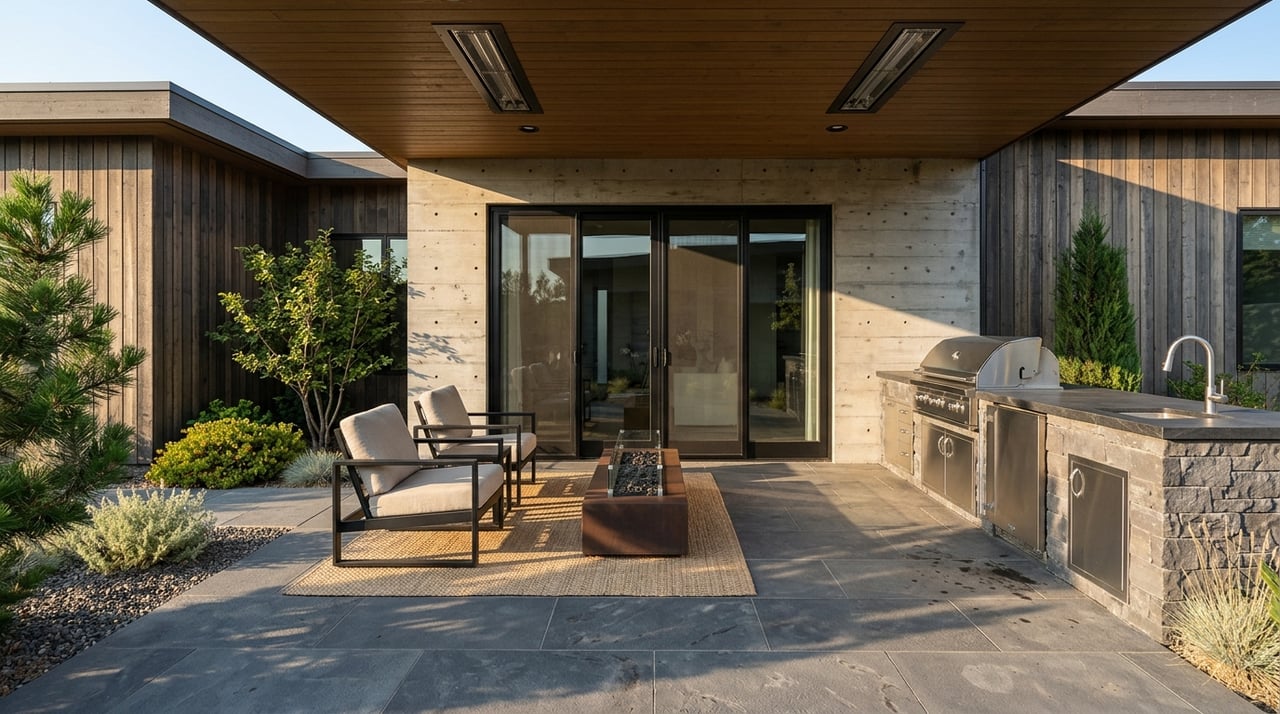
If you are adding a patio cover, pergola, deck, or outdoor kitchen, durability matters. Reno’s weather can put real stress on exterior structures, so a well-built design should be treated as a long-term improvement, not a simple add-on. This is especially important if you want the space to hold value and perform well over time.
The City of Reno’s patio cover design guide outlines the local conditions attached patio covers must be designed to handle, including 120 mph wind speed and 50 psf ground snow load. The guide also calls for details such as wall flashing, waterproofing, uplift connectors, heavy framing members, and a minimum roof pitch of 2:12. Approved roofing types listed in the guide include Class A asphalt shingles, standing seam metal roofing, and modified bitumen on solid-roof covers.
The takeaway is simple: if you want a structure to last in Reno, it should be designed for local conditions from the start. Proper footings, durable connectors, and weather-ready roofing are not luxury extras here. They are part of building something that can stand up to sun, wind, snow, and seasonal change.
Features that add four-season durability
Look for design choices that support year-round performance, such as:
- Solid shade structures with weather-appropriate roofing
- Proper flashing and waterproofing where structures meet the home
- Durable framing and connectors designed for wind and snow loads
- Roof pitch and drainage planning to move moisture away effectively
- Materials that tolerate temperature swings without excessive wear
These details may not be the most visible part of the project, but they often have the biggest impact on long-term value.
Check permits before you build
Before starting a major outdoor project, it is worth confirming what the City of Reno requires. According to the city’s building permit page, most construction and building projects require a permit, and applications are submitted electronically through the ONE Regional Licensing and Permitting portal. The city also notes that it adopted the 2024 building codes and the 2023 NEC on July 1, 2025, and that as of January 1, 2026, plans are only accepted under the 2024 code set.
For homeowners, that means permit review should be part of the early planning phase, not an afterthought. If you are investing in an attached cover or another substantial exterior structure, checking requirements upfront can help you avoid delays and redesigns later.
Use water-wise landscaping that still feels inviting
A beautiful Reno yard does not need to rely on large, thirsty lawn areas. Because the region averages only about seven inches of annual rainfall and outdoor irrigation drives much higher summer water use, efficient planting design matters. TMWA recommends organizing landscapes by water zones, with sprinklers used for turf and drip irrigation used for trees, shrubs, and flowers.
That structure can help your outdoor living space feel intentional and easier to maintain. You can keep turf where it serves a real function, such as a play or lounge area, while using lower-water plantings around patios, pathways, and seating zones. The result is often a yard that looks more tailored to Reno’s environment and requires less upkeep in the long run.
TMWA’s planning themes are especially useful here because they show how native desert plants, wildflower meadows, and low-maintenance edge plantings can reduce water use without making the landscape feel sparse. In many Reno properties, that balance creates a cleaner, more refined outdoor setting.
Design with fire-wise thinking near the home
In Northern Nevada, landscaping choices near outdoor living areas also need to account for fire risk. TMWA states that the region is a high fire hazard environment and recommends plants with high moisture content, low-growing habits, and limited flammable chemicals. It also advises emphasizing herbaceous plants, low deciduous shrubs, and deciduous trees near homes, while avoiding evergreen shrubs and trees within 30 feet of the house. You can review that guidance in TMWA’s resource on living with fire hazards in Northern Nevada.
The City of Reno’s wildfire and home hardening guidance reinforces the same point. The city notes that fire danger can exist year-round, that home hardening focuses on non-combustible materials and debris-free surroundings, and that 60% to 90% of home loss in wildfire events is due to embers. The city also recommends keeping at least 10 feet of clearance between a grill and the house or any trees and vegetation.
Fire-wise outdoor design basics
Near patios, decks, and outdoor kitchens, it helps to prioritize:
- Low-growing, well-maintained plantings
- Healthy vegetation free of dead material
- Non-combustible materials where possible near the home
- Clear space around grills and cooking zones
- Reduced use of dense, highly flammable plantings close to structures
This approach supports both safety and ease of maintenance. It also tends to create cleaner, more open transitions between the house and the yard.
Focus on comfort, not just size
One of the biggest design mistakes in Reno is assuming that a larger patio automatically creates a better outdoor space. In reality, comfort often comes from the smaller details that support daily use. Shade at the right time of day, a surface that dries quickly, and some protection from wind can make a space feel more useful than a much larger exposed area.
That is especially relevant if you are thinking about long-term property appeal. Buyers often respond to outdoor spaces that feel finished, practical, and suited to the local environment. In Reno, a durable, code-conscious, water-wise setup can read as more valuable than a design that looks impressive at first glance but does not perform well over time.
Think of outdoor living as part of the home
The strongest outdoor spaces in Reno usually feel connected to the way the home functions overall. They extend daily living, support entertaining, and respect the realities of the climate at the same time. That often means combining shade, weather-ready construction, efficient irrigation, and fire-wise landscaping into one cohesive plan.
If you are preparing to buy, sell, or improve a home in the Reno area, these choices can influence both enjoyment and long-term appeal. For tailored guidance on how outdoor living features fit into property value and buyer expectations in the Reno and Lake Tahoe corridor, connect with Kristin Zuckerman. Her advisor-led, concierge approach can help you evaluate what matters most for your property and goals.
FAQs
Do Reno outdoor living projects usually need a permit?
- In many cases, yes. The City of Reno states that most construction and building projects require a permit, so it is important to check the city’s permitting portal before building a patio cover or other substantial outdoor structure.
What makes an outdoor space comfortable in Reno’s climate?
- Layered shade, wind protection, and surfaces that dry quickly are often more important than a large open patio because Reno has strong sun, low humidity, and wide temperature swings.
What landscaping works best around Reno patios and decks?
- TMWA guidance supports low-water, zone-based landscaping with drip irrigation for trees, shrubs, and flowers, while using turf more selectively where it serves a specific function.
What are fire-wise planting choices near a Reno home?
- TMWA recommends emphasizing herbaceous plants, low deciduous shrubs, and deciduous trees near the home, while avoiding evergreen shrubs and trees within 30 feet of the house.
What should homeowners know about Reno outdoor kitchens and grills?
- The City of Reno recommends keeping at least 10 feet of clearance between a grill and the house, trees, or vegetation, which makes placement an important part of outdoor kitchen design.
Why does code-compliant outdoor construction matter in Reno?
- Reno structures need to handle local wind, snow, and weather conditions, so code-compliant design with proper footings, framing, flashing, and connectors can support better long-term durability and value.